The Park
A field guide to Sri Lanka's largest wild place.
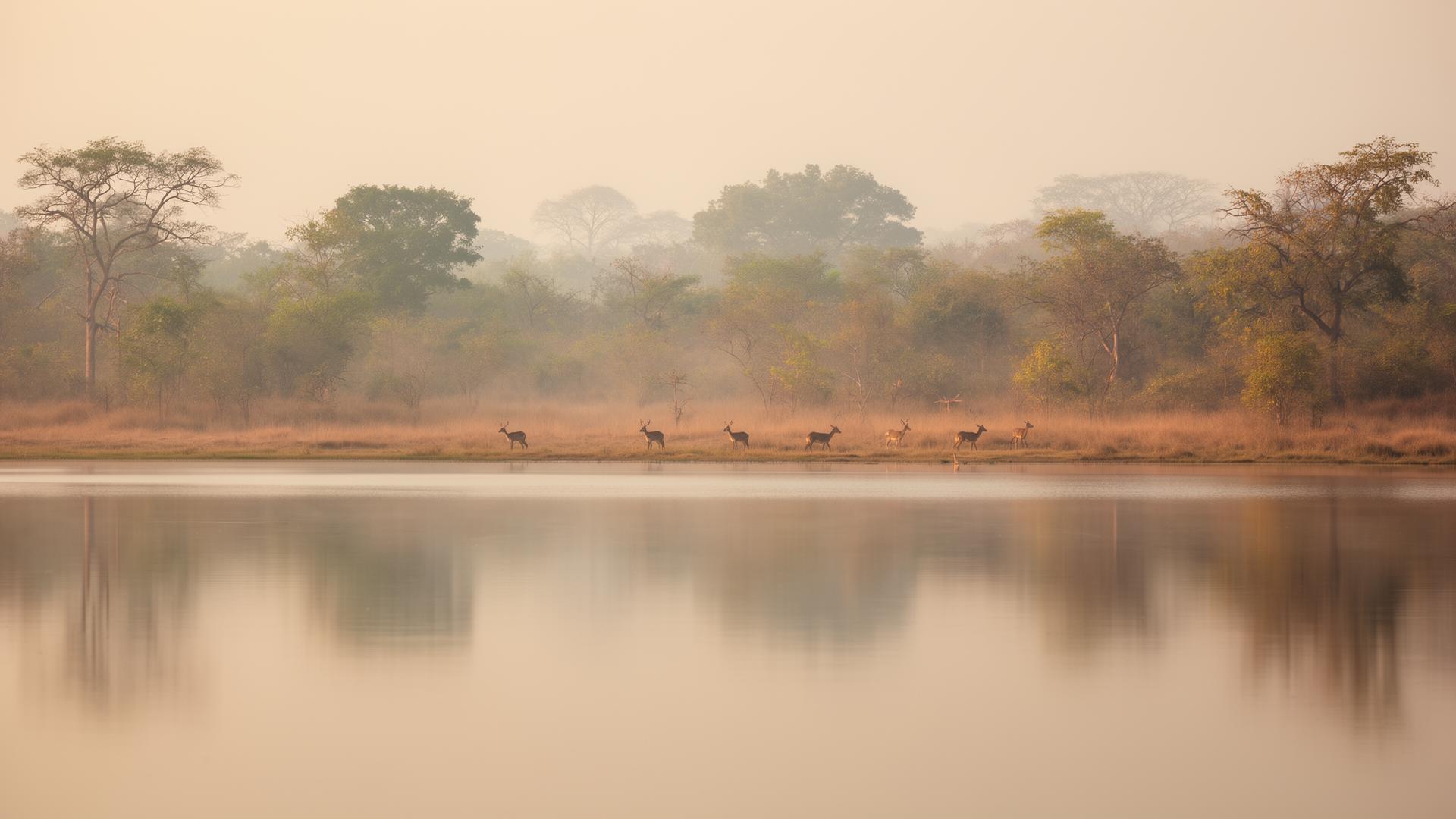
Wilpattu covers about 131,700 hectares, or roughly 1,317 square kilometres, across Sri Lanka's north-west dry zone. It is slow, quiet and lake-dotted, with shallow rain-fed villus shaping almost every drive.
Access and routes
How do I get to Wilpattu National Park?
The main entrance is at Hunuwilagama, about 25 km south-west of Anuradhapura and about 30 km north of Puttalam. Most visitors arrive through one of three gateways.
- Colombo to Wilpattu - roughly 4 to 5 hours via Puttalam and the A3.
- Puttalam to Wilpattu - roughly 45 to 60 minutes to the gate area.
- Anuradhapura to Wilpattu - usually under an hour; a good pairing with the Cultural Triangle.
The main roads are straightforward. The last few kilometres to individual camps can include sand tracks, which are easy in dry weather and slower during inter-monsoon rain.
Park layout
What are Wilpattu's villus?
Villus are natural, rain-fed depressions that hold water through much of the year. They are the signature landscape of Wilpattu: shallow lakes, open edges, birdlife, crocodiles and quiet places where the jeep engine can finally switch off.
Wilpattu is divided into blocks. Block 1 in the south is the most visited and where most safaris run. The further north you go, the fewer jeeps you see and the longer the drives become.
Best time to visit
When is the best time to visit Wilpattu?
Wilpattu is open year-round, but the best window depends on what you care about. The short version: come for dry-season clarity, or come from June to September for palu season and the sloth bear story.
- Feb-May - dry, cool mornings, good birding and general wildlife.
- Jun-Sep - palu season; sloth bears climb fruiting trees, with July and August usually the heart of it.
- Oct-Nov - inter-monsoon rain; some tracks may close and the forest turns very green.
- Dec-Jan - quieter, cooler, softer light and fewer visitors.
Park comparisons
What is different about Wilpattu compared to Yala or Udawalawe?
Yala is dense, dramatic and famous for leopards. Udawalawe is open, elephant-heavy and easier for a first family safari. Wilpattu is larger, quieter and slower, with villu lakes and sloth bears in palu season as its signature.
If you want frequent sightings and a busier pace, choose Yala. If you want elephants with younger children, choose Udawalawe. If you want space, patience and a more solitary feeling, Wilpattu is the one.
Park etiquette
What does Wilpattu ask of visitors?
The slowness of the park is part of why it works. A few unwritten rules from the rangers and guides we trust:
- Keep your voice low. Sound travels further than you think over the villus.
- No spotlighting. Wildlife photography here is a daylight craft.
- Do not crowd a sighting. If two jeeps are already there, move on.
- Stay in the jeep at all times inside the park. No exceptions.
- Carry your own water. Take all rubbish out, including fruit peels.